
Desert-Proof Your Hydraulics: Phoenix Maintenance Guide
Hydraulic Maintenance, Phoenix Contractors
Desert-Proofing Your Hydraulic Equipment: A Phoenix Owner's Guide to Year-Round Maintenance
Running hydraulic equipment in the Sonoran Desert is a different game than running it anywhere else. Phoenix heat, abrasive dust, brutal UV, and big temperature swings can turn a solid machine into a constant breakdown risk if you treat it like it lives in a mild climate. This guide walks Phoenix-area owners, contractors, and fleet managers through a practical, seasonal checklist to keep cylinders, pumps, hoses, and valves alive all year long—and out on the job instead of on a trailer.
Desert Fluid Selection and Viscosity: Get the Foundation Right
In Phoenix, hydraulic fluid is your first line of defense. The same oil that works fine in cooler states can thin out under 110°F ambient temperatures and even hotter reservoir temps, leading to sluggish response, internal leakage, and accelerated wear. Smart hydraulic equipment maintenance Phoenix starts with choosing the right viscosity and fluid type for desert duty.
- Match viscosity to temperature range. Work with your OEM specs, but in many Phoenix applications a high-quality anti-wear hydraulic oil with a higher viscosity index (VI) performs better, staying thick enough at high temps without turning to molasses on cooler mornings.
- Watch for heat-related fluid breakdown. Dark, burnt-smelling oil, varnish on components, or foaming in the tank are red flags. Learn more about how Phoenix heat causes hydraulic failures and adjust your service intervals before damage sets in.
- Schedule regular hydraulic fluid service Phoenix wide. In dusty, high-hour operations, fluid and filter changes often need to happen more frequently than the book suggests. Sampling oil for contamination and oxidation is a smart way to set intervals.
Hose and Seal UV/Heat Protection: Guard the Rubber
Phoenix sun is brutal on elastomers. Hoses and seals that last years in cooler regions can crack, harden, and leak quickly here. Proactive hydraulic maintenance Arizona means treating rubber as a consumable, not a lifetime component.
- Inspect exposed hoses quarterly. Look for checking, surface cracks, blistering, and stiffness—especially on lines that run along booms, masts, and frames exposed to direct sun.
- Add UV shielding where possible. Use hose sleeves, guards, or reroute lines away from constant sunlight and hot exhaust paths. Even simple shielding can buy you years of extra life.
- Monitor cylinder seals for weeping. A slight film of oil around rod seals can be your early warning that heat and UV have taken their toll. If you are unsure whether to rebuild, review when to repair or replace your hydraulic cylinder before a minor seep becomes a blown seal and downtime.
Dust and Particulate Contamination Prevention: Fight the Sandstorm
Sonoran dust acts like liquid sandpaper inside a hydraulic system. Once it gets past breathers, caps, or damaged boots, it grinds away at pumps, valves, and cylinder rods. Keeping dirt out is cheaper than any repair you will ever authorize.
- Upgrade and maintain breathers. Use quality desiccant or high-efficiency breathers on reservoirs and change them before they are visibly saturated or clogged, especially on machines that live in open yards.
- Keep service ports clean. Wipe around fill caps, test ports, and quick couplers before connecting anything. On windy Phoenix days, a quick blast of air and a clean rag can save a pump.
- Protect cylinder rods. Check wiper seals and rod boots; any cut or missing wiper is an open door for grit. Address it immediately to avoid accelerated rod and gland wear.
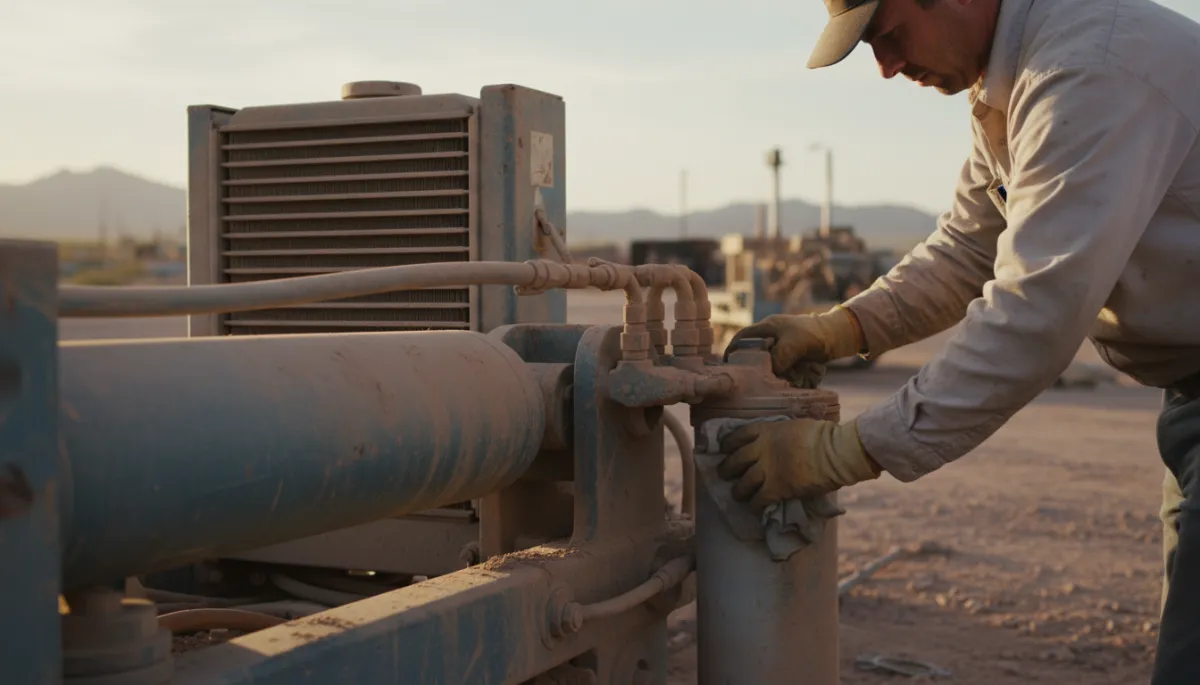
Clean fittings and healthy filters keep abrasive desert dust from circulating through your hydraulics.
Cooler and Filter Maintenance Cadence: Stay Ahead of the Heat
In the Valley, heat load is relentless. Underserviced coolers and filters are a direct path to overheated oil, slow operation, and premature component failure. A disciplined cadence is essential for reliable hydraulic equipment maintenance Phoenix operators can count on.
- Clean coolers frequently. Blow out fins with low-pressure air, not high-pressure water that can bend fins and trap mud. On equipment working around aggregate, concrete, or agriculture, weekly cleaning is not overkill during hot months.
- Track filter changes by hours, not just dates. Use differential pressure gauges where available. If you do not have gauges, follow a conservative schedule based on hours and environment, and cut used filters open periodically to see what they are catching.
- Verify fan and pump operation. A cooler does nothing if its fan motor, belts, or drive pump are weak. Listen for noisy bearings and watch for slipping belts or low flow.
Pre-Summer Inspection Priority Items: Spring Checklist for Phoenix Fleets
Before the first real heat wave, take a day to go through your machines methodically. A structured pre-summer inspection dramatically reduces mid-season breakdowns and emergency calls when your schedule is already packed.
- Check all hoses and fittings. Focus on high-pressure lines, bends, and clamp points. Replace any hose with bulges, deep abrasions, or leaks instead of “running it a little longer.”
- Inspect cylinders and rods. Look for scoring, chrome damage, or side loading. Addressing issues early is cheaper than a mid-season failure; review when to repair or replace your hydraulic cylinder as part of this step.
- Confirm cooler performance. Bring the machine up to operating temperature and verify that fans cycle on, temperatures stabilize, and warning lights stay off under load.
- Service fluid and filters. If you are close to your next interval, do it before summer, not during it. This is the ideal time for a full hydraulic fluid service Phoenix operators can align with other seasonal maintenance.
Winter Cold-Start Considerations for Arizona: Mild, Not Harmless
Phoenix winters are mild, but early morning temperatures can still drop low enough to affect hydraulic performance. Cold, thick oil puts extra stress on pumps and drives, especially on older iron and high-hour fleets that sit overnight outdoors.
- Warm up systems before heavy load. Let the machine idle and cycle functions slowly to bring oil up to temperature instead of going straight to full pressure the moment it starts.
- Confirm viscosity is appropriate. If you went to a heavier grade to survive summer, verify that cold-start performance is still acceptable. A high VI fluid can help bridge both seasons without compromise.
- Watch for new leaks. Seals that hardened in summer heat may start leaking once contractions from cooler temps hit. Catching these early avoids sudden hose or seal failures during the next warm-up cycle.
When to Call in a Phoenix Hydraulic Specialist
Even with a solid checklist, some issues are better handled by a dedicated hydraulic technician who understands local conditions. If you are dealing with recurring overheating, unexplained pressure loss, or repeated hose failures, it is time to bring in help. Before you start swapping parts at random, review these hydraulic repair tips for Phoenix contractors and consider a full system inspection.
Hydraulics Dunn Right provides mobile hydraulic repair across the Phoenix Valley, coming to your job site, yard, or plant with the tools and experience to diagnose and correct problems on the spot. For sudden failures that stop your crew in its tracks, our guidance on emergency hydraulic repair in Phoenix helps you stabilize the situation safely until a technician arrives.
Schedule a Desert-Proof Hydraulic Inspection with Hydraulics Dunn Right
A well-thought-out seasonal plan is the difference between reliable uptime and constant firefighting in our desert environment. By dialing in fluid selection, protecting hoses and seals from UV and heat, controlling dust contamination, and following a disciplined cooler, filter, and inspection cadence, you can keep your equipment productive through every Phoenix season.
If you want a professional set of eyes on your fleet, Hydraulics Dunn Right is ready to help. We specialize in hydraulic maintenance Arizona contractors, plant managers, and equipment owners rely on, with on-site inspections tailored to Sonoran Desert realities. Call Hydraulics Dunn Right today to schedule a year-round hydraulic health check and make sure your machines are truly desert-proof before the next busy season hits.